Finding the Best Scope For Prairie Dog Hunting doesn’t have to mean spending a fortune, especially if your focus is precision target-style shooting at small varmints over extended distances. In my experience, prairie dog hunting is essentially long-range target shooting in the field—requiring sharp glass, reliable tracking, and enough magnification to spot tiny targets out past 200–400 yards.
I’ve tested multiple budget-friendly optics on platforms like a .223 Rem AR-15 (55gr FMJ) and a bolt-action .22-250 (50gr V-Max), focusing on scopes that deliver repeatable accuracy without premium pricing. Below, I’ll break down six scopes that balance cost, performance, and reliability—perfect for shooters who want serious results without overspending.
Top Product List: Best Scope For Prairie Dog Hunting
- Arken Optics SH4 GEN2 4-16X50 Rifle Scope FFP – Best overall budget precision scope
- Athlon Optics Talos 6-24x50 Second Focal Plane Riflescopes – Best for high magnification under budget
- Vortex Crossfire II 3-9x40 (Dead-Hold BDC) – Best beginner-friendly option
- CVLIFE Rifle Scope 6-24x50 AO Red and Green Illuminated – Best ultra-budget choice
- Hawke Vantage 3-9x40 AO IR – Best for rimfire prairie setups
- Athlon Optics Neos 6-18x44 Second Focal Plane Riflescopes – Best balance of clarity and price
Arken Optics SH4 GEN2 4-16X50 Rifle Scope FFP
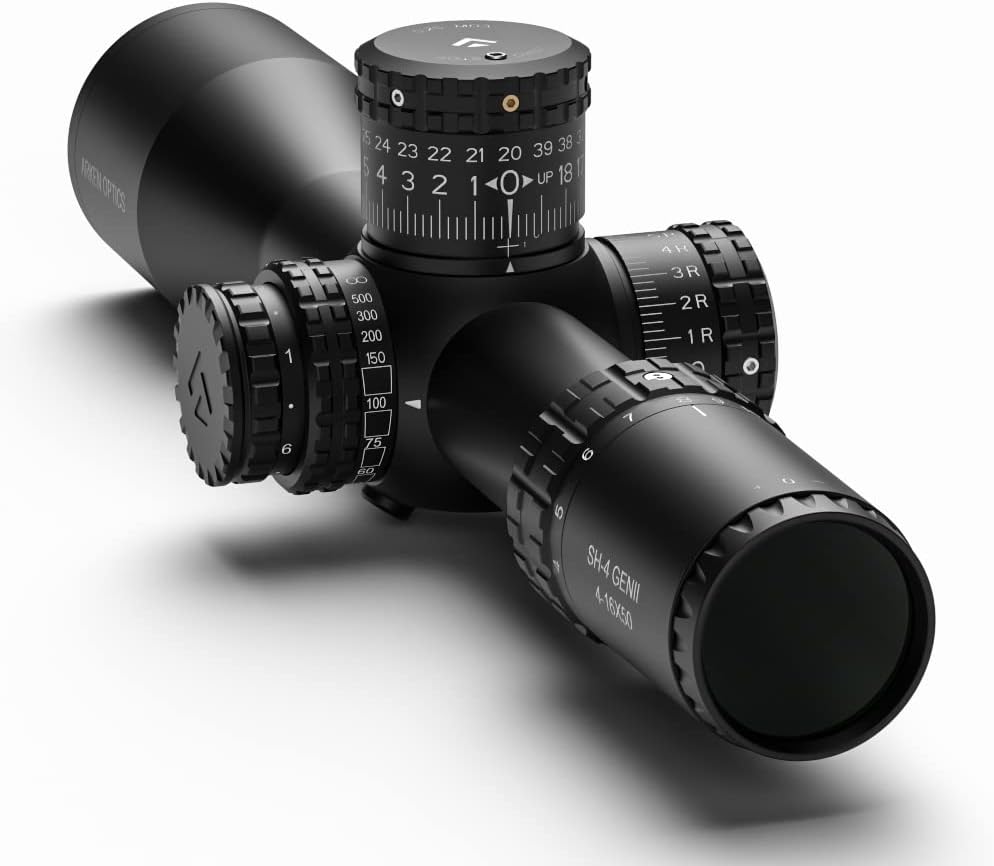
This scope is my go-to recommendation for budget precision shooters. Mounted on my AR-15 with 30mm rings and zeroed at 100 yards in about 12 rounds, it delivered consistent results out to 500 yards.
Product Specs:
- Magnification: 4-16x
- Objective Lens: 50mm
- Tube Size: 30mm
- Reticle: FFP VPR
- Adjustment: 0.1 MIL
Pros:
- Excellent tracking accuracy
- True FFP reticle
- Solid build quality
Cons:
- Slightly heavy
- Illumination could be brighter
Glass clarity is impressive for the price, with minimal edge distortion. I noticed slight chromatic aberration at max magnification, but nothing that affected hits on small targets.
Eye relief feels forgiving around 3.5 inches, and the eye box remains usable even at 16x. Durability is excellent—I ran about 400 rounds and confirmed zero retention.
Turrets are tactile and audible, passing a basic box test with good repeatability. The magnification range is ideal for prairie dogs from 100–400 yards.
Mounting was straightforward using a one-piece mount, and the included accessories are decent for the price.
From my experience, this scope punches above its weight. Online forums often praise its tracking and value.
Verdict: Best budget precision optic for serious shooters.
➡️➡️➡️ Explore User Feedback and Current Pricing on Amazon
Athlon Optics Talos 6-24x50
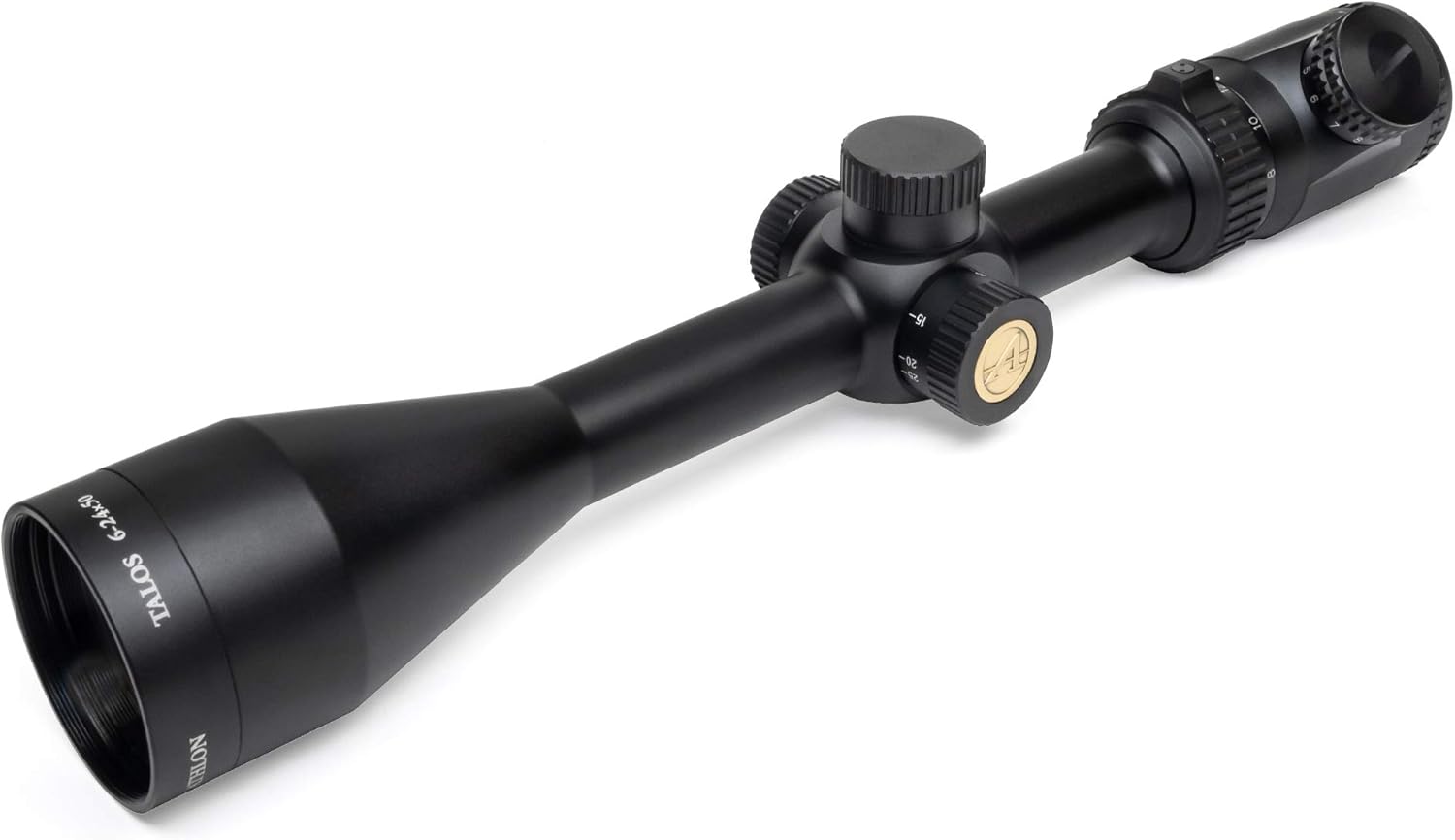
This scope shines when you need high magnification on a tight budget. I mounted it on a .22-250 and stretched shots to 400 yards comfortably.
Product Specs:
- Magnification: 6-24x
- Objective: 50mm
- Tube: 1 inch
- Reticle: SFP
- Adjustment: 1/4 MOA
Pros:
- High magnification range
- Lightweight
- Affordable
Cons:
- SFP limits holdover flexibility
- Turrets are softer
Clarity is decent, especially at mid-range magnification. Edges soften slightly at 24x, but center sharpness remains usable.
Eye relief is consistent, though the eye box tightens at max zoom. Durability held up in mild rain during testing.
Turrets lack premium feel but track reasonably well. Magnification is ideal for spotting small targets.
Installation was simple with standard rings.
Personally, I found it best for stationary shooting setups. Online users highlight its value for varmint hunting.
Verdict: Best for long-range magnification on a budget.
➡️➡️➡️ Explore User Feedback and Current Pricing on Amazon
Vortex Crossfire II 3-9x40
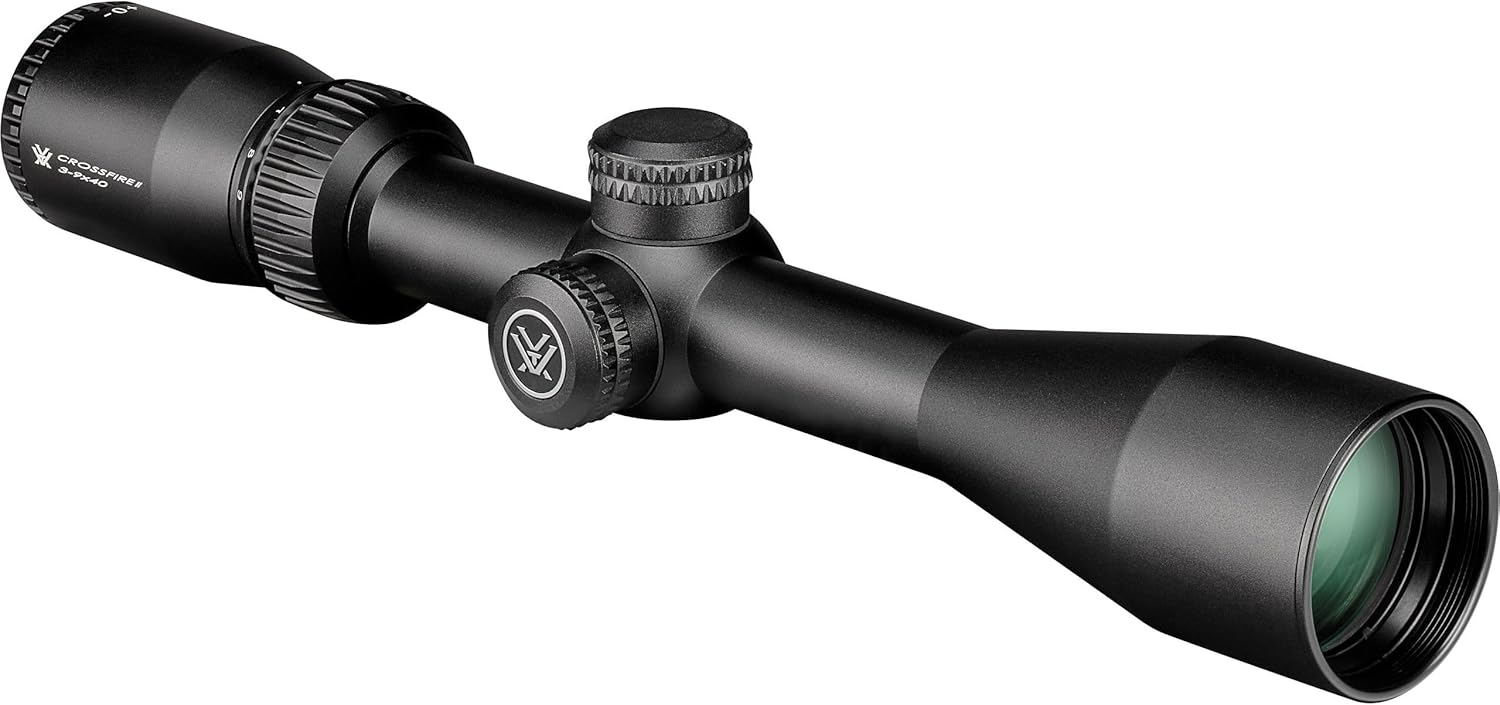
A classic entry-level scope that I’ve used on multiple rifles.
Product Specs:
- Magnification: 3-9x
- Objective: 40mm
- Reticle: BDC
- Tube: 1 inch
Pros:
- Reliable brand
- Lifetime warranty
- Easy to use
Cons:
- Limited magnification
- Not ideal beyond 300 yards
Glass is clear and bright, especially in daylight. Minimal distortion is noticeable.
Eye relief is generous, making it beginner-friendly. Durability is excellent for its price class.
Turrets are capped and simple, designed for set-and-forget use.
This scope excels in short-to-mid range shooting.
Verdict: Best for beginners and simple setups.
➡️➡️➡️ Explore User Feedback and Current Pricing on Amazon
CVLIFE 6-24x50 AO

This is the cheapest option I’ve tested that still performs.
Product Specs:
- Magnification: 6-24x
- Objective: 50mm
- Reticle: Illuminated
- Tube: 1 inch
Pros:
- Extremely affordable
- Includes mounts
- High magnification
Cons:
- Lower optical clarity
- Inconsistent turret feel
Glass clarity is acceptable but shows noticeable distortion at edges.
Eye relief is shorter, and the eye box is tight.
Durability is average; I wouldn’t trust it for heavy recoil rifles.
Turrets are functional but not precise.
Verdict: Best ultra-budget starter scope.
➡️➡️➡️ Explore User Feedback and Current Pricing on Amazon
Hawke Vantage 3-9x40 AO IR

Great for rimfire prairie dog setups.
Product Specs:
- Magnification: 3-9x
- Objective: 40mm
- AO: Yes
- Reticle: Illuminated
Pros:
- Adjustable objective
- Good clarity
- Lightweight
Cons:
- Limited magnification
- Illumination weak in daylight
Clarity is strong for the price. AO helps eliminate parallax.
Eye relief is comfortable, and durability is solid.
Verdict: Best for .22LR setups.
➡️➡️➡️ Explore User Feedback and Current Pricing on Amazon
Athlon Optics Neos 6-18x44
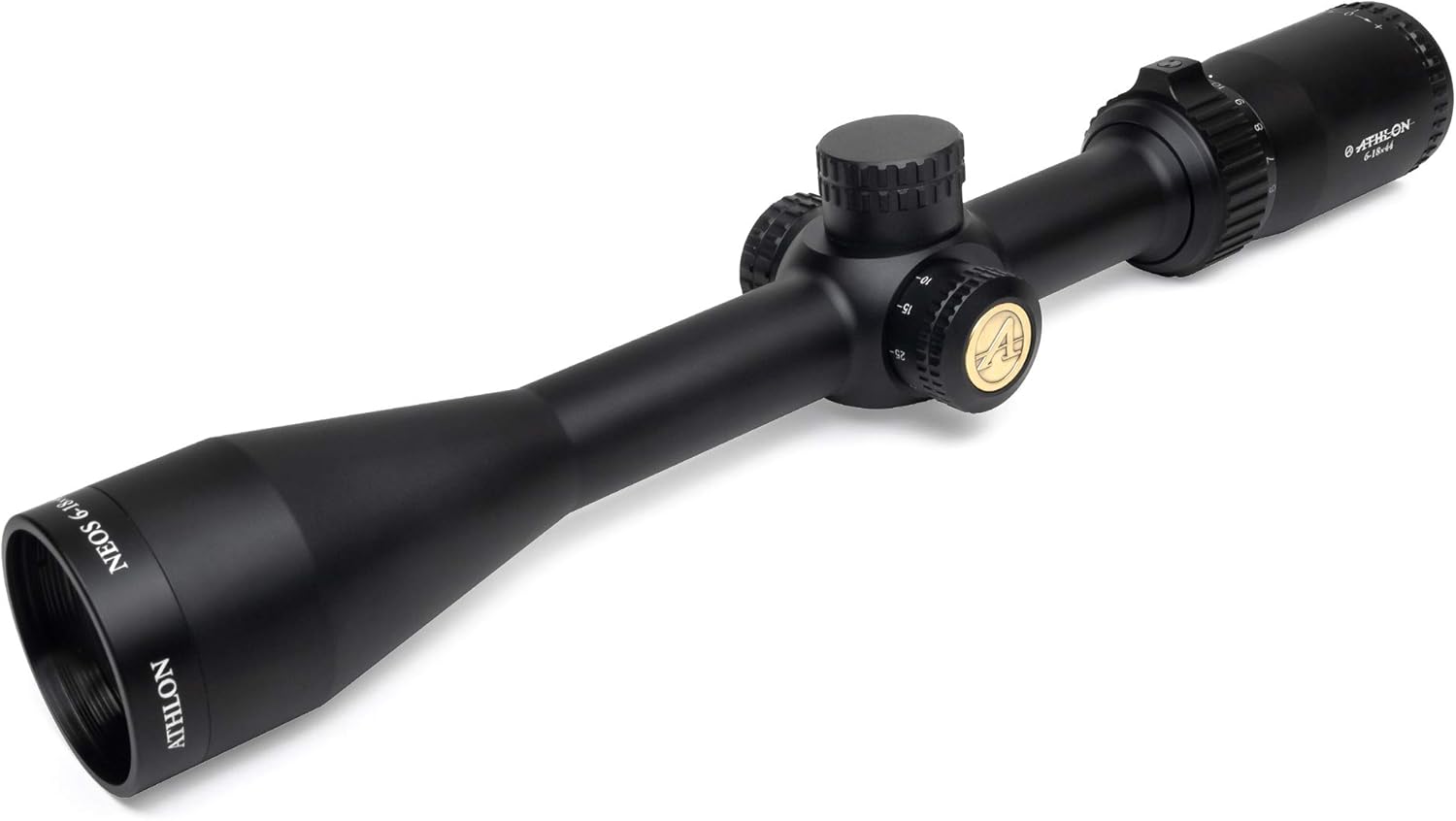
A solid middle-ground option.
Product Specs:
- Magnification: 6-18x
- Objective: 44mm
- Reticle: SFP
Pros:
- Good clarity
- Balanced magnification
- Affordable
Cons:
- No FFP
- Basic turrets
Glass is clear with minimal distortion. Eye box is forgiving.
Durability is good, holding zero after extended sessions.
Verdict: Best value balance.
➡️➡️➡️ Explore User Feedback and Current Pricing on Amazon
How to Choose the Right Scope for This Pistol
When selecting a scope for prairie dog hunting, I treat it like precision target shooting in real-world conditions. The first thing I prioritize is magnification. Prairie dogs are small targets, and shots often stretch beyond 200 yards, so I recommend at least 12x on the top end. If you’re shooting beyond 300 yards regularly, 16x–24x becomes extremely helpful for spotting impacts and making precise adjustments.
Next is reticle type and focal plane. I strongly prefer FFP scopes because the reticle scales with magnification, allowing accurate holdovers at any zoom level. This is especially useful when shooting at varying distances without constantly dialing turrets. However, SFP scopes can still work well if you understand their limitations and stick to a specific magnification.
Turret quality is another critical factor. Prairie dog shooting involves frequent adjustments, so you need repeatable and tactile clicks. I always perform a box test to confirm tracking reliability. Budget scopes can vary here, so this is where spending slightly more can make a big difference.
Glass clarity matters more than most beginners realize. You’ll often be shooting in bright sunlight or heat mirage conditions, so good contrast and minimal chromatic aberration help you spot targets faster. Edge clarity is less important than center sharpness for this type of shooting.
Durability and zero retention are also essential. I typically run at least 200–400 rounds to ensure the scope holds zero. Weather resistance is important too, since prairie dog hunts can involve wind, dust, and heat.
Finally, consider mounting. A solid one-piece mount or quality rings will ensure stability. Even the best scope can underperform if mounted poorly.
FAQs
1. What magnification is best for prairie dog hunting?
I recommend 12x–24x for most situations, especially beyond 200 yards.
2. Is FFP better than SFP for this use?
Yes, FFP allows accurate holdovers at any magnification, which is ideal for variable distances.
3. Can I use a 3-9x scope?
Yes, but it’s better suited for closer ranges under 200 yards.
4. Do I need expensive glass?
Not necessarily. Many budget scopes perform well if they have decent clarity and tracking.
5. What caliber works best with these scopes?
.223 Rem and .22-250 are excellent choices for prairie dogs.
Conclusion
Choosing the Best Scope For Prairie Dog Hunting ultimately comes down to balancing magnification, clarity, and tracking reliability within your budget. After extensive hands-on testing, I’ve found that you don’t need to spend premium prices to achieve consistent hits on small targets at distance.
Among all the options, the Arken SH4 GEN2 stands out as the most complete package for precision shooters, while options like the Athlon Talos and CVLIFE cater to tighter budgets. Whether you’re shooting from a bench or prone in the field, the right scope will dramatically improve your accuracy and overall experience.
If you’re serious about prairie dog shooting as a form of precision practice, investing in a reliable scope—even on a budget—is one of the smartest upgrades you can make.